A better mobile experience
Jigsy started on desktop, where a mouse and a generous screen make the puzzle feel spacious and unhurried. On mobile, it was functional — but the experience was tighter than it should have been, and grids felt cramped even on a modern phone.
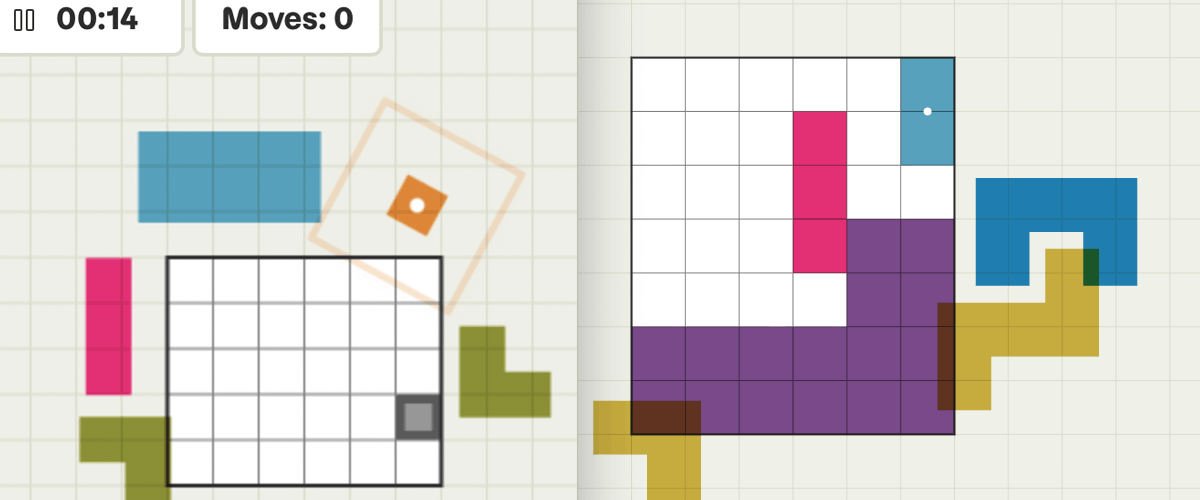
The mobile UI has been substantially rebuilt. You can now pinch to zoom in and out of the whole play area, which makes a real difference on Extreme puzzles with their larger grids — you can zoom out to see the whole board, then zoom in to precisely place a piece. Touch gesture handling has been made more responsive throughout, and the overall visual presentation has been improved - small pieces on small screens now have a wider ‘tolerance’ halo (which is now visible), making them easier to rotate and position.
It’s a better experience on tablet too, which remains the ideal way to play Jigsy — the two-finger pinch-to-scale gesture for pieces feels natural and intuitive on a large touchscreen.
Four new piece shapes
Jigsy’s piece library has grown. Four new shapes have been added to the Pro and Extreme shape suites, each chosen for a specific reason.
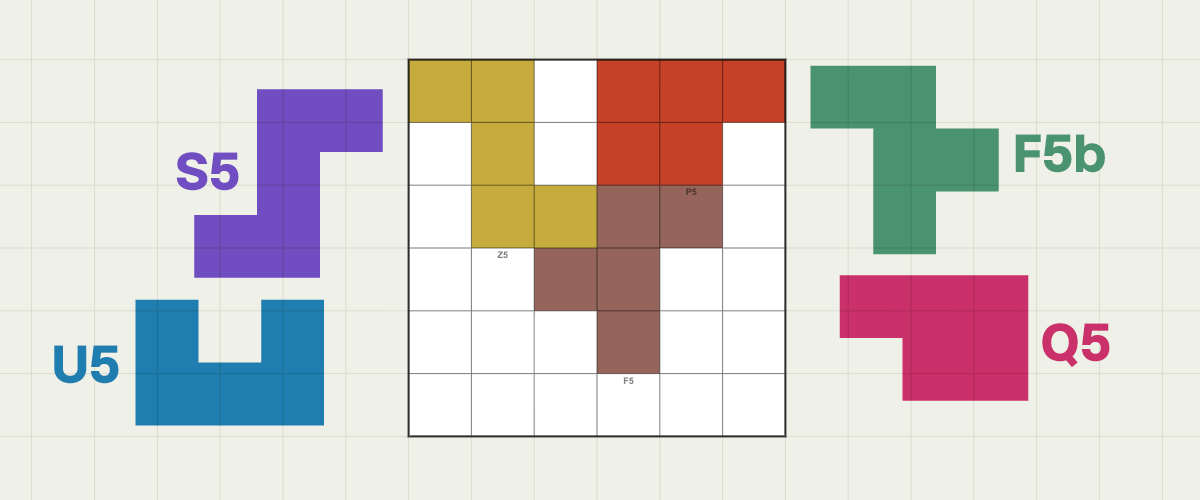
These additions expand the palette of shapes available to the generator and add more variety to the puzzles you’ll encounter day to day. They’re weighted to appear with reasonable frequency — not so often they feel familiar immediately, but often enough that you’ll learn their character over time.
Smarter difficulty — driven by your data
This is the part that’s taken the most work, and it’s genuinely iterative.
Jigsy records two things for every completed puzzle: how long it took and how many moves were made. Combined with the star ratings players leave at the end — a simple one-to-five on how hard the puzzle felt — this builds up a picture over time of what actually makes a puzzle difficult, as opposed to what the generator assumed would be difficult.
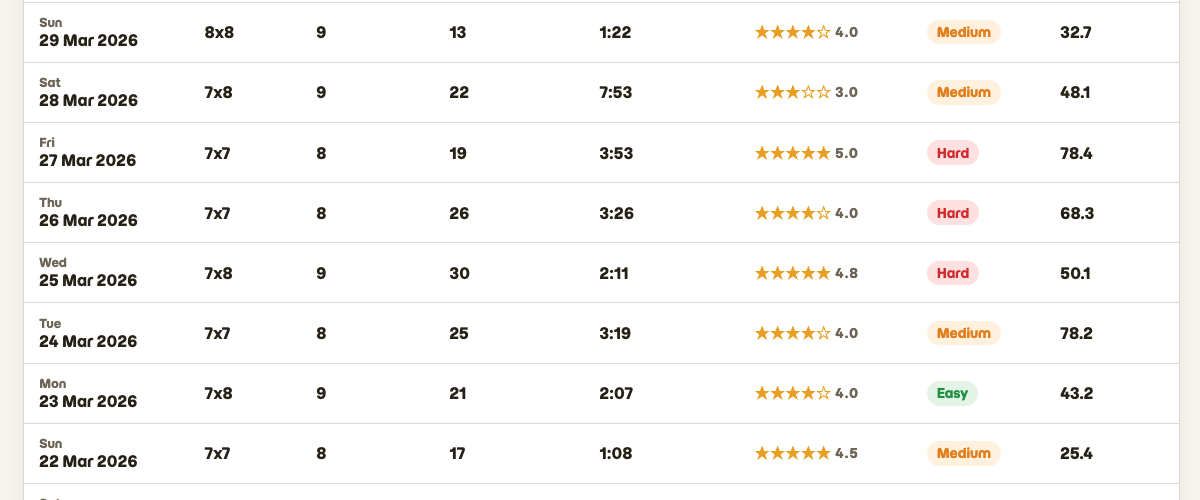
The analysis looks at correlations between puzzle features and completion time. Some findings were expected. Others were surprising. Puzzles with more unique piece shapes generally take longer — variety creates genuine cognitive load. The F5 pentomino is strongly associated with harder puzzles, more so than almost any other piece. Conversely, straight pieces like R3 and R4 consistently appear in the fastest-solved puzzles — they’re easy to place and reduce the combination options for everything else.
One of the clearest findings: a significant number of Extreme puzzles were being generated with two large (double-scaled) pieces rather than one — and those puzzles were almost always solved quickly and rated easy. Two large pieces take up more of the grid and leave less room for ambiguity. The puzzle effectively solves itself once you’ve placed them. This has now been fixed: every Pro and Extreme puzzle will always contain exactly one large piece. The scale mechanic remains central — it’s just no longer diluted.
Grid sizes have been rebalanced too. Pro was generating too many puzzles on small 5×5 and 6×6 grids, which produced trivially simple results. Those grid sizes have been removed entirely from Pro. The new distribution is predominantly 6×7 and 7×7, which gives the generator enough space to produce genuinely interesting puzzles without being so large that they become overwhelming.
None of this is a one-time fix. The data keeps accumulating, the analysis keeps running, and the algorithm keeps evolving. The goal is a calibration loop: generate puzzles, measure how they’re received, adjust the generator, then repeat. What you play tomorrow is shaped by what players played last month.
Your ratings genuinely matter
When you finish a puzzle, you’re invited to rate it - was it a GOOD puzzle (out of 5 stars) and how hard it ‘felt’. That data — combined with your completion time — feeds directly into how the generator evolves. If Pro feels too easy, or Extreme too random, tell us through the stars. It shapes what comes next.
Play today’s puzzle Try the challenge